I was asked to write a blog post about my experience at BC TechDays 2026. But as I sit here on my balcony in sunny Finland, reflecting on the week, the thought of writing a page – long list of new AI features, development tools, and AL coding updates felt wrong. Instead, I wanted to write something deeper. Something more universal that anyone in the IT field – and maybe even beyond – can truly relate to.
Escaping the Matrix
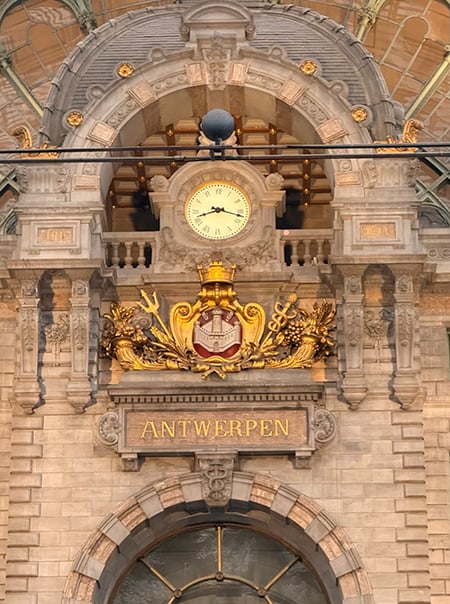
Let’s track back to Monday, June 8th. It’s 14:00, and I’m hastily closing out my daily tasks while taking one last Teams call in the back of a taxi. The car is heading toward Helsinki airport, where I'm meeting my colleague, Tero Piiroinen. Our destination: the heart of Europe. We're flying into Brussels, then catching a train to Antwerp for the annual BC TechDays conference.
While we are both incredibly excited about the week ahead, our minds are undeniably still anchored to our daily work. What’s happening with that Jira ticket? Did I leave that one deployment unfinished? Did I reply to that client email? The typical mental loop of the daily IT grind.
We made it to Antwerp. It was a smooth but exhausting journey. Tomorrow is the first pre-conference workshop day, but right now, there's no time to overthink it. It's just time to sleep and worry about tomorrow, tomorrow.
The next morning: it’s workshop day! After a hefty breakfast we arrive at the venue. I grab my badge and head toward the classroom. With a complementary Belgian Fanta (seriously, those are incredibly good) in one hand, and my laptop in the other, I walk into the room.
I greet the other workshop attendees and set up my laptop. As the screen boots up, the daily habits instantly try to claw their way back in: Maybe I should just check that one Jira ticket? Should I quickly check my email? What about Teams?
Just then, I hear the door close. Our instructor walks in and greets the room. It’s Roberto Corella, and he is here to lead an intensive, 8-hour deep-dive session on Copilot Studio agents and their implementation with Business Central.
The moment he starts the session, the urge to check email or Teams completely vanishes. I am locked in – not because I am some genius with natural hyper focus abilities, but because I have to be. The sheer flood of new information completely overwhelms my brain, forcing it to pivot. Suddenly, the noise of daily routines is drowned out. Even as I am actively scrambling and trying to keep up with Roberto’s instructions, my mind is already racing with possibilities: How can we implement this for our customers? What is the absolute best use case for this technology vs native Business Central agents?
This creative hyper focus continues for the full eight hours, and honestly, follows me long after that - right up until my head hits the hotel pillow. I have successfully escaped the matrix.
Breaking the Autopilot Mode
Software developers are creative people. When you think about it, our main job is to find creative solutions to hard problems. The actual manual labor of writing code is a pretty small part of it - and of course, in the era of AI, that part is getting even smaller.
But when we are stuck in our day-to-day work, juggling busy projects and individual Jira tickets, it's easy to just settle for the same exact ways of working. It's easy, and it doesn't require that much thought. Psychologists actually have a term for this: cognitive entrenchment. It’s basically when your brain gets so comfortable with its daily routine that it switches to autopilot mode.
Forcing yourself out of that autopilot mode is super valuable, but in your daily work, it's incredibly hard to pull yourself out of it. That is why conferences are such an excellent place for this.
When you enter a conference environment – especially in a completely different country – your whole brain shifts. Your senses are already on high alert because you’re trying to take in all the hustle and bustle around you. You're navigating the crowds, trying to figure out where the different sessions are, and mapping out where you need to be.
And that’s when the real mental shift happens. Even before you step foot into a single presentation, you start looking inward at your own team. You find yourself asking: What is something that our team actually needs right now? Do we have gaps in our testing strategy? What about using automated agents for our daily development? Before the first speaker even grabs the microphone, your brain is already actively auditing your current ways of working, trying to match the sessions on the schedule to the exact bottlenecks you left behind in Finland.
Then, when the sessions actually start, you are immediately blasted with new information. You're sitting through deep dives on how to evaluate agentic capabilities, getting future previews of fully autonomous agentic development flows, and breaking down the architectural structures of the latest AI agents.
Your mind gets completely flooded. You feel overwhelmed, but at the very same time, incredibly excited about all the new things you could implement. And the best part? This exact feeling – this mix of being overwhelmed but deeply inspired – is what stays with you long after the conference ends and you've flown back home.
Meeting Your Peers
After a decent pasta dinner, a few hours of lazy strolling through the streets of Antwerp, and a good night's sleep, it’s time for the actual conference days to begin.
Fueled by a hearty breakfast, Tero and I hop into a taxi and cruise through the busy Antwerp morning traffic toward the venue. The conference is held in a massive movie theater complex, and the entrance is already packed with attendees waiting to grab their badges. When you work in a small team back home, it’s easy to forget just how many Business Central developers are actually out there! The opening keynote stated that this year there are over 1,200 attendees - and exactly eight from Finland, including us.
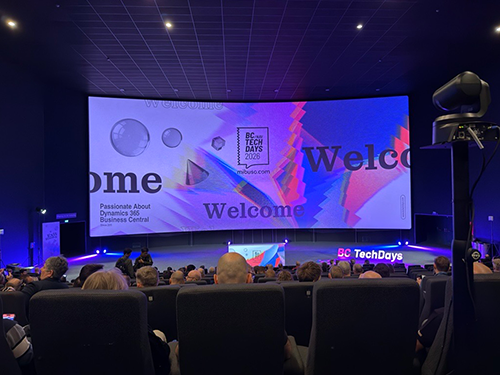
After a presentation on Microsoft’s agentic development vision and a deep dive into the new expense agent (which was genuinely really cool), I head for the lunch area with my mind buzzing with new concepts.
The space is absolutely packed. I can hear overlapping conversations echoing all around the room. Some people are debating the new version 28 update, while others are strategizing about how Business Central native agents can be implemented using AL code. People have their laptops cracked open, and out of the corner of my eye, I catch glimpses of developers actively writing AL code in VS Code while munching on their lunch. It truly is a beautiful kind of chaos.
I find a quiet corner table, start working on my own pasta, and just look around the room. While I'm zoning out and taking the scene in, I hear a familiar, happy shout behind me: "Moro Daniel!"
I turn around and am thrilled to see a fellow Finnish Business Central developer I first met back at BC TechDays 2023. We immediately start catching up, dissecting the morning presentations, and bouncing ideas off each other. In that moment, we aren't thinking about the fact that our employers might be competing for the same clients back home. In this space, we are all just BC developers who happen to wear different jerseys from 9 to 5.
The Business Central Developer Tribe
Hundreds of thousands of years ago, early humans weren’t the strongest or the fastest creatures out there. What kept us alive against all those crazy predators was our ability to cooperate and build a community. In the wild animal kingdom, the sick or the elderly were often left behind. But human tribes took care of their own because they were a valued part of the community.
That deep sense of tribalism is hardwired into our very core, and it is still incredibly present in the modern era. But instead of ancient humans sharing folklore around a crackling campfire, the modern BC developer gathers to share war stories about complex deployments, GitHub struggles, and AL-Go pipelines.
Today, our tribes are no longer defined by geography; they are defined by how we think and what we build. Me, a Finnish BC developer, and a German BC developer belong to the exact same tribe. We speak the exact same technical language. We share the same daily frustrations, the same breakthroughs, and the same experiences.
The Real Work Begins
The Belgian countryside passes by outside the train window. I’m staring at the scrambled notes on my laptop, which now has a few mandatory new stickers hastily slapped on the back cover. Even though it was a great week, it was exhausting, and I’m more than ready to hop on the blue wings of Finnair and head back home.
The event might be over, but the real work begins now. The challenge isn't just decrypting my own notes - it’s figuring out how to pass this knowledge down to our team. What exactly should we implement into our ways of working? The Copilot workshop, for example, was incredibly informative and exciting, but the real question is what our team can actually do with it. (On a side note: Microsoft just presented a new built-in Copilot chat with agentic capabilities. This is going to pair perfectly with the lessons from the workshop, since we can implement our own custom agents right in there!)
Conferences are not only for the attendees; they are for the whole team. The most important job for the attendee is to gather all that creative excitement and try to pass it on to the team back home. There is plenty of work left after this!
So, why do conferences matter for creative thinkers? Because you cannot get new ideas if you never leave the room. You can't break out of cognitive entrenchment by staring at the same Jira board every day.
If you are an IT professional – or a professional in any field – feeling the weight of the daily grind, find a way to step away. Go find your tribe. Let yourself get overwhelmed by new ideas. Escape the matrix for a few days – and then bring that excitement back home to your team.